Wart Removal Coventry - Fast, Effective & Professional Treatment
At The Skinutrition Clinic we can remove warts simply and painlessly
WART REMOVAL
Warts are one of the most common skin concerns I see at the clinic — and one of the most straightforward to resolve with professional treatment. While warts are entirely harmless, they can be persistent, uncomfortable and a source of self-consciousness, particularly when they appear on visible areas such as the hands or face. At The Skinutrition Clinic in Coventry, I offer fast, effective and virtually painless professional wart removal, with most warts resolved in a single treatment session.
WART Removal near me
If you are looking for wart removal near me and live in Coventry or the surrounding area contact The Skinutrition Clinic today to arrange a FREE consultation
What Are Warts?
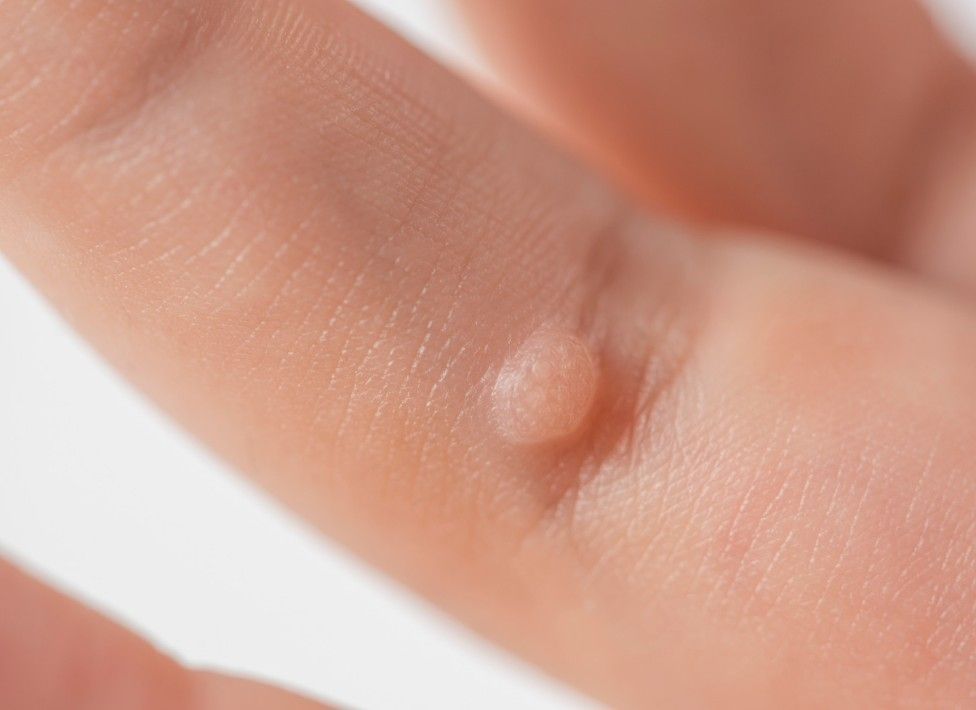
Warts are small, benign skin growths caused by infection with the human papillomavirus (HPV). The virus enters the skin through tiny cuts or breaks in the skin barrier and triggers an overgrowth of cells in the outer skin layer, producing the characteristic rough, raised appearance of a wart.
Warts are contagious — they can spread from person to person through direct contact, and from one area of the body to another through touching, scratching or shaving. They are particularly common in children and young adults, but can affect people of any age.
Despite being harmless, warts rarely resolve quickly on their own. Without treatment, they can persist for months or years, spread to other areas, and in the case of plantar warts, become increasingly uncomfortable with pressure. Professional treatment is the most reliable and efficient route to removal.
Types of Warts I Treat
Common Warts (Verruca Vulgaris)
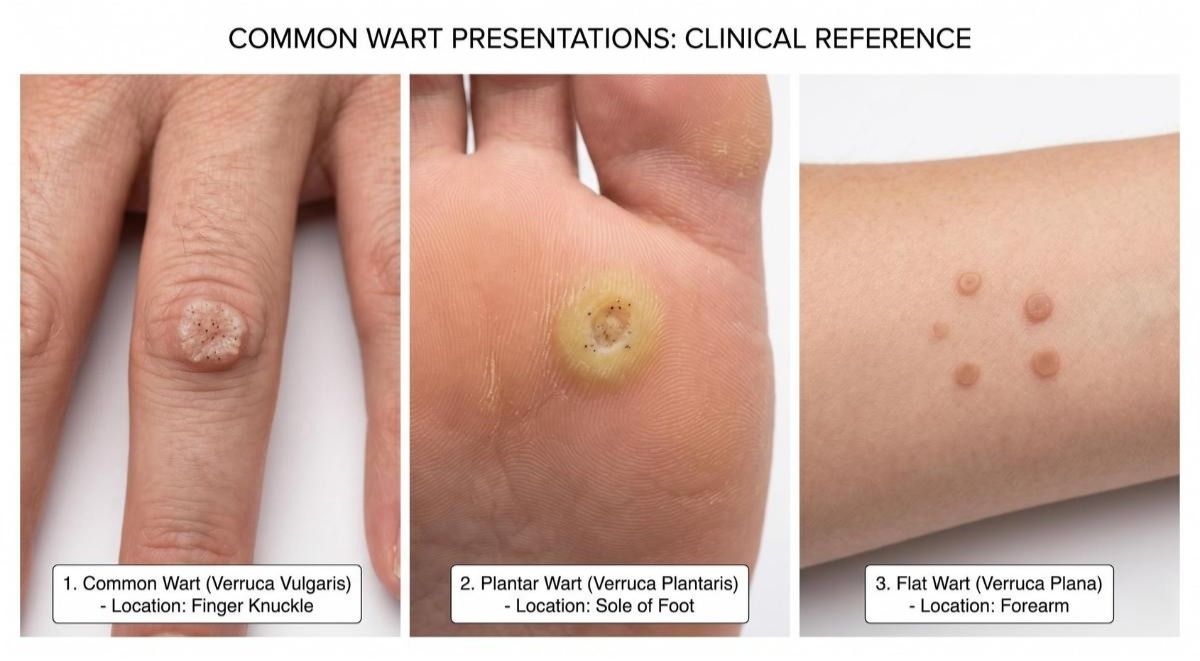
The most frequently seen wart type — rough, raised, dome-shaped growths that most commonly appear on the fingers, knuckles and backs of the hands. They have a characteristically rough, cauliflower-like surface texture and may contain small black dots, which are small clotted blood vessels within the wart tissue.
Plantar Warts (Verrucae)
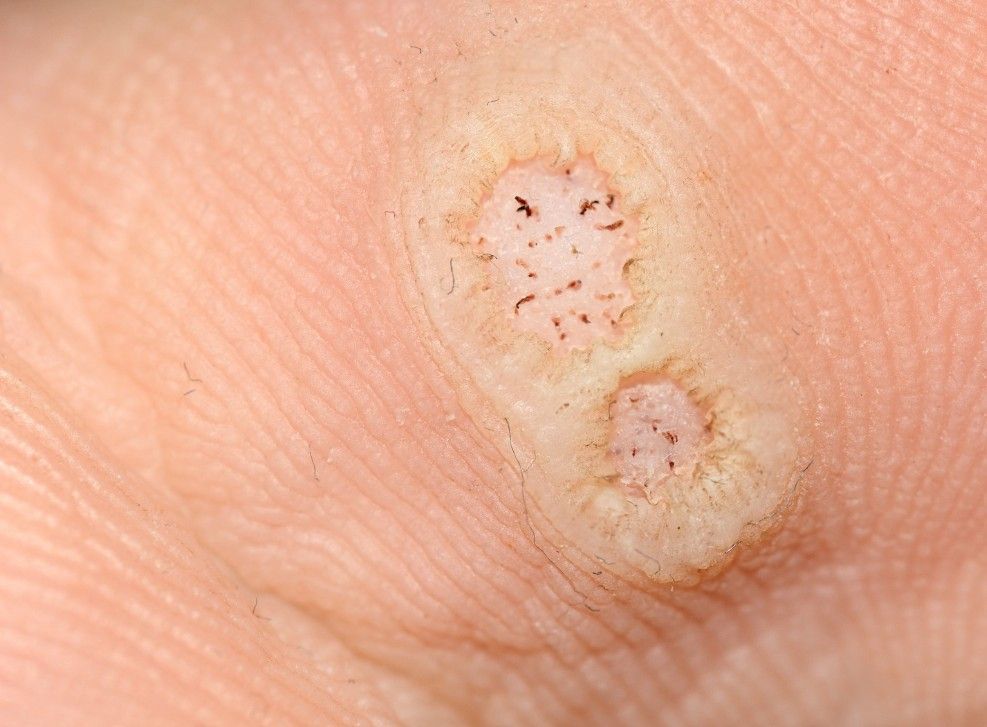
Plantar warts — commonly known as verrucae — develop on the soles of the feet and are often pushed flat or inward by the pressure of standing and walking, making them appear less raised than common warts. They can be uncomfortable or painful when walking, particularly if they develop over a pressure point. Multiple plantar warts sometimes cluster together in a mosaic pattern.
Flat Warts (Verruca Plana)
Flat warts are smaller and smoother than common warts, typically appearing in groups on the face, forehead, hands or legs. They are more common in children and teenagers and can spread rapidly through shaving or skin-to-skin contact.
Filiform Warts
Filiform warts are thin, thread-like or finger-shaped warts that most commonly appear on the face — particularly around the nose, mouth and chin. They can grow quickly and, due to their facial location, are often a particular cosmetic concern for clients.
Periungual Warts
Warts that develop around or under the fingernails or toenails. They can disrupt nail growth and become uncomfortable as they develop beneath the nail plate. Professional treatment is particularly advisable for this type due to the sensitivity of the surrounding nail tissue.
Wart Removal Treatment at the Skinutrition Clinic
The most frequently seen wart type — rough, raised, dome-shaped growths that most commonly appear on the fingers, knuckles and backs of the hands. They have a characteristically rough, cauliflower-like surface texture and may contain small black dots, which are small clotted blood vessels within the wart tissue.
Cryotherapy
Cryotherapy is my primary method for wart removal and the gold standard professional treatment for most wart types. The treatment works by applying extreme cold — using liquid nitrogen or a precision cryotherapy device — directly to the wart tissue. This freezes and destroys the wart cells whilst leaving the surrounding healthy skin unaffected.
The treated wart tissue gradually blisters, dries and falls away naturally over the days following treatment, with healthy skin regenerating beneath. The process is quick, precise and causes minimal discomfort — most clients describe a brief stinging or cold sensation during the treatment itself, which passes quickly.
What to expect:
- Treatment time is typically just a few minutes per wart
- Most common warts are resolved in a single session
- Larger, deeper or more stubborn warts may require two to three sessions spaced two to three weeks apart
- The treated area may blister and form a scab in the days following treatment — this is a normal and expected part of the healing process
- Full healing typically takes one to two weeks following treatment
Plasma Pen Wart Removal
Plasma pen treatment offers an alternative approach to wart removal that is particularly well suited to warts in certain locations or for clients where cryotherapy is less appropriate. The plasma pen works by delivering a precise, controlled electrical arc to the surface of the wart, converting skin moisture into a plasma gas that ablates the wart tissue with exceptional accuracy.
The key advantage of plasma pen treatment for warts is the precision it offers — the electrical arc can be directed with a very fine tip, making it ideal for warts in delicate or hard-to-reach locations such as around the fingers, near the nail bed, or on the face, where pinpoint accuracy is important to avoid affecting surrounding healthy skin.
What to expect:
- A topical numbing cream is applied to the treatment area before the procedure, making it comfortable for the vast majority of clients
- Treatment time is typically a few minutes per wart depending on size and location
- The treated area will form a small crust or scab as the ablated tissue heals — this is a completely normal part of the healing process and should be left to resolve naturally without picking
- Full healing typically takes one to two weeks, during which the treated area should be kept clean, dry and protected from sun exposure
- Most warts are resolved in a single plasma pen session, though larger or deeper warts may benefit from a follow-up treatment
The plasma pen is the same technology used at the clinic for skin tightening and skin tag removal, and is a well-established tool within the clinic's existing treatment repertoire.
Cryotherapy or Plasma Pen — Which is Right for You?
Both cryotherapy and plasma pen treatment are effective methods for wart removal, and the choice between them depends on several factors including the wart type, its location, size, and your individual skin characteristics. In some cases I may recommend one over the other; in others, either is equally appropriate and personal preference can guide the decision.
I will assess your wart at your consultation and recommend the most suitable treatment approach — or discuss the options with you where both are viable, so you can make an informed choice.
Aftercare
Following either cryotherapy or plasma pen wart removal, I will provide you with clear, simple aftercare instructions tailored to the treatment you have received. For both methods, this includes guidance on keeping the treated area clean and protected, what to expect during the healing process — including any blistering, crusting or scabbing that is a normal part of healing — and when to get in touch if you have any concerns. Following aftercare guidance carefully supports the best possible healing outcome and reduces the risk of the wart recurring or spreading.
Wart Removal vs. Over-the-Counter Treatments
Many clients come to the clinic having already spent months using over-the-counter wart treatments — salicylic acid preparations, home freezing kits and similar products — with limited or no success. There are good reasons why professional treatment consistently outperforms these options:
- Treatment strength — professional cryotherapy achieves significantly lower temperatures than home freezing kits, producing a more complete and reliable result
- Precision — professional application targets the wart tissue precisely, minimising impact on surrounding skin
- Assessment — a professional can confirm the growth is indeed a wart before treating it, which matters both for treatment selection and for ruling out the small number of skin lesions that can superficially resemble warts but require different management
- Efficiency — most warts treated professionally resolve in one to three sessions; over-the-counter treatments typically require weeks or months of daily application with variable results
Is It a Wart? — When Professional Assessment Matters
While most warts are straightforward to identify by their characteristic appearance, a small number of other skin lesions can look similar to warts and require different treatment or professional assessment. These include seborrhoeic keratoses, corns, molluscum contagiosum, and in rare cases, lesions that warrant medical review.
If you are uncertain whether a skin growth is a wart, or if a growth has changed in appearance, bled without trauma, or appeared suddenly, I would always recommend a professional assessment before attempting any form of self-treatment. I assess every client before treatment to confirm the nature of the lesion and the most appropriate treatment approach.
If you have a growth you are unsure about, please mention this when booking and I will assess it at your appointment.
Wart Removal and Skin Tag Removal — Combined Appointments
Many clients with warts also have skin tags they would like removed, or vice versa. Both can be treated during the same appointment in most cases, making it straightforward to address multiple concerns in a single visit. If you have both warts and skin tags you would like removed, simply mention this when booking and I will ensure sufficient time is allocated.
Frequently Asked Questions — Wart Removal Coventry
Does wart removal hurt?
Cryotherapy causes a brief stinging or cold sensation during treatment, which most clients find very manageable and which passes quickly once the application is complete. The treated area may be mildly tender for a day or two following treatment. Where sensitivity is a concern — for example with plantar warts on a pressure point — I can discuss options to maximise your comfort during treatment.
How many sessions will I need?
The majority of common warts are resolved in a single cryotherapy session. Larger, deeper or more persistent warts - including many plantar warts - may require two to three sessions spaced two to three weeks apart. I will give you a clear expectation of the likely number of sessions needed when I assess your wart at your first appointment.
Will the wart come back after treatment?
Cryotherapy destroys the wart tissue effectively, but it does not provide immunity against future HPV infection. A wart in the same location can recur if the virus reinfects the area, particularly if the skin barrier is compromised. Following aftercare guidance carefully after treatment — including keeping the treated area clean and protected during healing — reduces the risk of recurrence. If a wart does recur, it can simply be retreated.
Can you remove multiple warts in one appointment?
Yes, in most cases multiple warts can be treated during a single appointment. Please mention how many warts you would like treated when booking so I can allocate appropriate time for your appointment.
Is cryotherapy safe for children?
Cryotherapy is a well-established and safe treatment for warts in children as well as adults. Children are particularly commonly affected by warts given the ease of transmission in school environments. I will ensure the treatment is delivered as comfortably as possible and will explain the process clearly to both parent and child before beginning.
Can warts on the face be treated?
Yes. Facial warts — including filiform warts around the nose and mouth — can be treated with cryotherapy. Treatment of facial warts requires particular care and precision, which I apply as standard. I will assess the wart's location and characteristics before confirming the most appropriate treatment approach.
What is the difference between cryotherapy and plasma pen wart removal?
Both treatments effectively destroy wart tissue, but they work differently. Cryotherapy uses extreme cold to freeze and break down the wart cells, while plasma pen treatment uses a precise electrical arc to ablate the wart tissue. Plasma pen treatment offers particular advantages for warts in precise or delicate locations due to the fine accuracy of the tip, and involves numbing cream for comfort. I will assess your wart and discuss which approach is most appropriate for you at your appointment.
How is this different from the skin tag removal you offer?
kin tags and warts are both benign skin growths but are entirely different in nature — skin tags are small, soft, hanging pieces of tissue with no infectious cause, while warts are caused by HPV infection. The removal techniques used reflect these differences. Both can often be treated at the same appointment if you have concerns of both types. For more information on skin tag removal, see the dedicated skin tag removal page.
Interested in our Skin Blemish Removal Treatments ?
I'm here to help!
I want to know your needs exactly, so that I can provide the perfect solution specific for you. Let me know what you want to achieve and I'll do my best to help.