Scar Removal Coventry — Advanced Clinical Treatments for Scars & Skin Texture
At The Skinutrition Clinic we can remove or reduce the visibility of scars - get in touch today to find out more
SCAr removal
Scars are a natural part of the skin's healing process — but that does not mean you have to simply accept them. Whether your scars are the legacy of acne, surgery, injury or stretch marks, modern clinical treatments can produce significant and sometimes dramatic improvements in their appearance. At The Skinutrition Clinic in Coventry, I provide personalised scar treatment programmes built around the specific characteristics of your scars, your skin type, and your goals — combining the most effective in-clinic treatments with nutritional support for the skin's own regenerative processes.
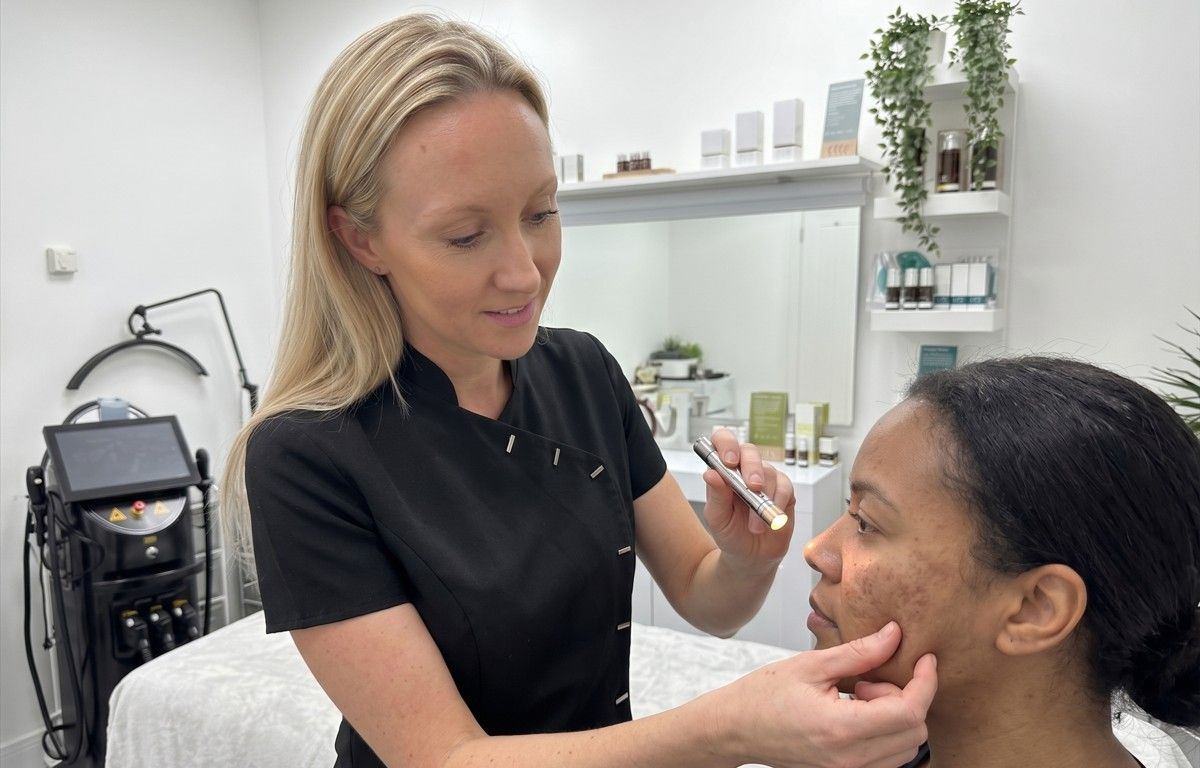
SCARRED SKIN
If you have concerns about a scar is having on your appearance, call or book a FREE consultation today
How Scars Form — and Why They Look the Way They Do
When the skin is damaged — whether by acne, injury, surgery or the stretching forces that cause stretch marks — it repairs itself by laying down collagen fibres to close the wound. This process is efficient but imprecise: the collagen produced in scar tissue is structurally different from the collagen in healthy skin, arranged in a less organised pattern that results in the altered texture, tone and appearance we recognise as a scar.
The appearance of a scar is influenced by several factors:
- The depth and extent of the original injury — deeper damage produces more significant scarring
- The location on the body — areas of high movement or tension heal differently to stable areas
- Skin tone — medium to deeper skin tones are more prone to post-inflammatory pigmentation alongside scarring, and to raised hypertrophic or keloid scarring
- Age — skin's collagen production and repair capacity declines with age, affecting both how scars form and how they respond to treatment
- Nutrition — micronutrient availability significantly affects collagen synthesis and the quality of skin repair
Understanding these factors is central to selecting the right treatment approach — which is why every scar treatment client at the Skinutrition Clinic begins with a thorough assessment.
Types of Scars I Treat
Acne Scars
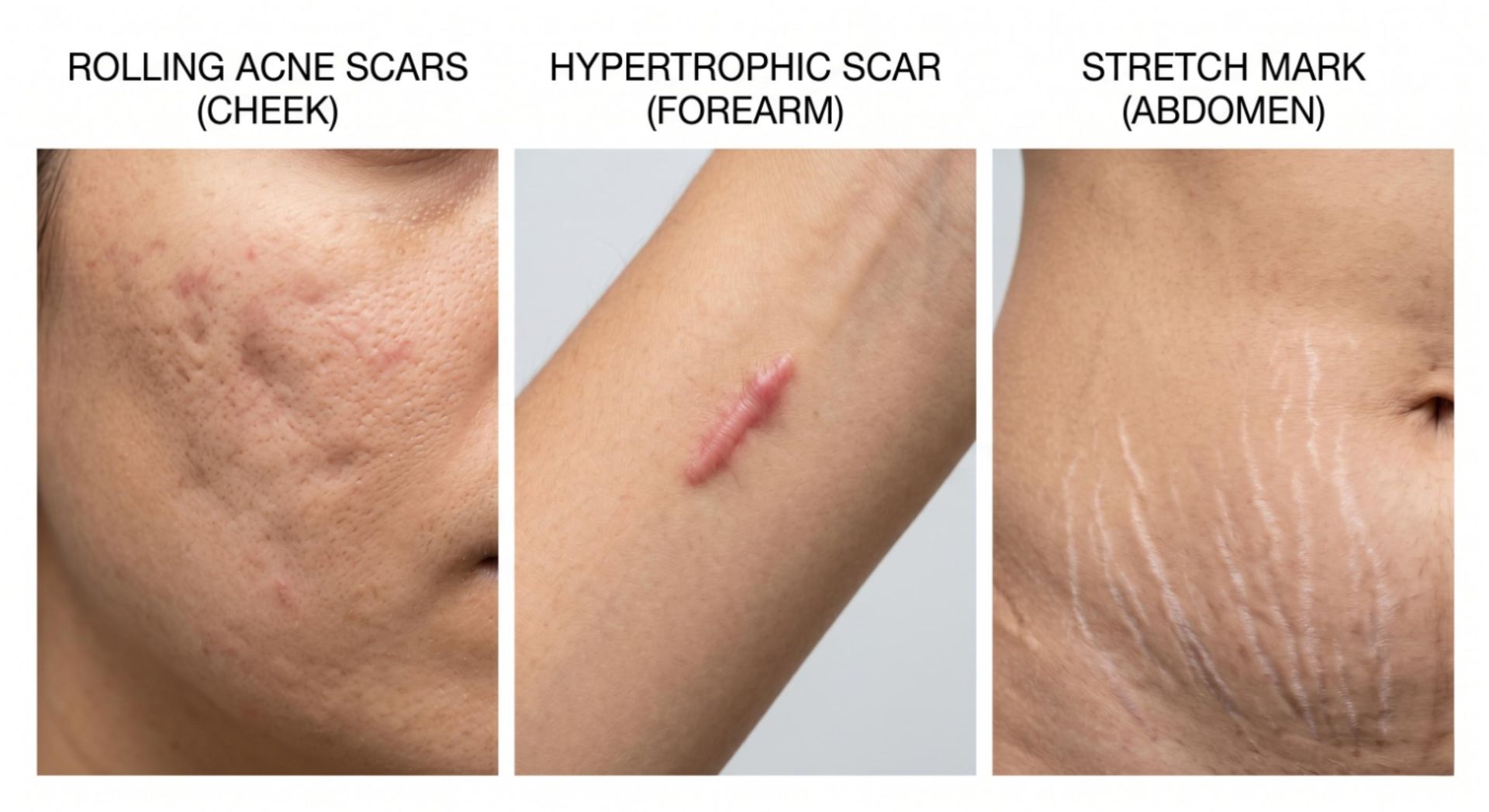
Acne scarring is the most common type of scarring I treat at the clinic, and it encompasses a wide range of presentations that each respond differently to treatment.
Ice pick scars — deep, narrow, pitted scars that extend into the dermis. The most challenging type to treat, responding best to treatments that stimulate deep collagen remodelling.
Boxcar scars — broad, shallow to moderately deep depressions with defined edges, typically on the cheeks and temples. Respond well to microneedling and resurfacing treatments.
Rolling scars — broad, shallow depressions with gently sloping edges that give skin a wave-like, undulating texture. Often respond particularly well to microneedling.
Post-inflammatory hyperpigmentation (PIH) — technically not scarring but frequently confused with it, PIH refers to the dark marks left behind after acne resolves. These are a pigmentation issue rather than a textural one and respond to different treatments. Where both PIH and textural scarring are present, a combined treatment approach addresses both.
For dedicated information on PIH, see the pigmentation treatment page.
Surgical & Injury Scars
Scars resulting from surgery or injury vary enormously in their characteristics — from fine, flat, pale scars that have healed well but remain visible, to raised, thickened or hyperpigmented scars that are more prominent. Treatment depends heavily on the scar's age, type, location and how it has matured. Newer scars — generally under two years old — are still actively remodelling and often respond particularly well to treatment during this window.
Stretch Marks
Stretch marks (striae) form when the skin is stretched rapidly beyond its elastic capacity — during pregnancy, periods of rapid growth or significant weight change. They begin as red or purple marks (striae rubra) as the dermis tears, fading over time to a pale, silvery appearance (striae alba). Treatment is most effective during the red or purple phase when the marks are still active, though improvement in the appearance of mature stretch marks is also achievable.
Hypertrophic Scars
Hypertrophic scars are raised, thickened scars that remain within the boundary of the original wound. They form when the body produces excess collagen during healing and are more common in areas of skin tension. Unlike keloid scars, hypertrophic scars do not extend beyond the original wound boundary and can improve significantly with the right treatment approach.
Scar Treatments Available at the Skinutrition Clinic
Microneedling
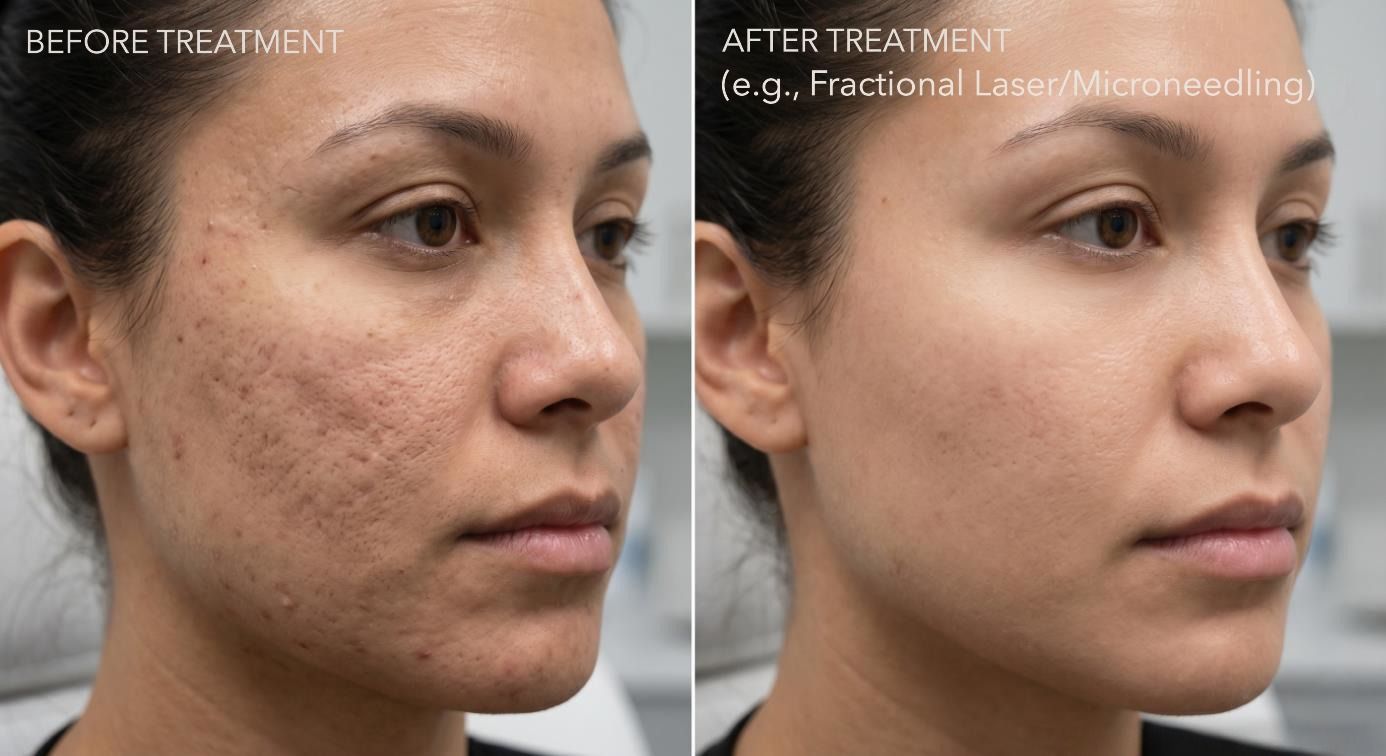
Microneedling is the cornerstone treatment for most types of atrophic (depressed) scarring, including the rolling, boxcar and ice pick scars associated with acne. Fine needles create controlled micro-injuries in the skin, triggering a wound-healing response that stimulates the production of new, well-organised collagen and elastin. Over a course of treatments, this progressive collagen remodelling fills and smooths depressed scars, improving both texture and the overall appearance of the skin.
Microneedling is suitable for all skin types and tones, carries a low risk of post-inflammatory pigmentation, and requires minimal downtime — making it one of the most widely applicable scar treatments available.
Chemical Peels
Professional chemical peels accelerate the skin's cell turnover, progressively resurfacing the uppermost layers of the skin and stimulating collagen production in the dermis beneath. For scar treatment, peels work most effectively on shallow textural scarring and the pigmentation changes associated with scarring. A course of peels can significantly improve overall skin tone and texture, softening the appearance of shallow scars and the post-inflammatory marks that often accompany them.
BioRePeel in particular offers a more intensive resurfacing effect with minimal downtime, making it a strong option for clients with mild to moderate textural scarring seeking meaningful improvement without significant recovery time.
IPL & Laser Treatments
For scars associated with significant redness or pigmentation change — including red or purple stretch marks, post-acne redness, and hyperpigmented surgical scars — IPL can reduce discolouration and improve the overall appearance of the scar. The carbon laser facial can also contribute to skin texture improvement as part of a broader scar treatment programme.
Plasma Skin Tightening
For stretch marks and areas of skin laxity associated with scarring, plasma skin tightening offers a non-surgical option for improving skin texture and tightness. It is particularly effective for stretch marks in areas such as the abdomen, where skin laxity is a concurrent concern alongside the stretch marks themselves.
The Nutritional Foundation of Scar Healing
Collagen is the primary structural protein involved in scar formation and remodelling — and its production depends directly on the availability of specific nutrients. As a qualified nutritional therapist as well as a skin specialist, I routinely consider the nutritional dimension of scar treatment alongside clinical protocols.
Key nutritional factors relevant to scar treatment include:
- Vitamin C — essential for collagen synthesis and one of the most important nutrients for skin repair. Deficiency directly impairs the skin's ability to produce well-structured collagen
- Zinc — critical for wound healing, collagen formation and skin cell regeneration. Deficiency is associated with poor healing and increased scarring
- Protein intake — adequate dietary protein provides the amino acid building blocks required for collagen production
- Vitamin A — regulates skin cell turnover and collagen remodelling, playing a direct role in how scars mature over time
- Omega-3 fatty acids — reduce systemic inflammation and support the skin's healing environment
- Silica — supports collagen cross-linking and skin structural integrity
Where nutritional factors appear to be relevant to your healing and skin health, I will incorporate appropriate dietary and supplementation guidance into your overall treatment programme.
Realistic Expectations for Scar Treatment
One of the most important things I can offer you as a client is an honest assessment of what is achievable for your specific scars. Scar treatment has advanced enormously in recent years, and significant improvement is achievable for most scar types — but it is important to understand that:
- Complete removal is rarely achievable — the goal of scar treatment is significant improvement in appearance rather than complete elimination
- Results develop progressively — treatments like microneedling work by stimulating the skin's own collagen production, which takes time. The full benefit of a course of treatment continues to develop for several months after the final session
- Multiple sessions are typically required — the number depends on the scar type, depth, age and your skin's response to treatment
- Older scars can still respond — while newer scars often respond more readily, well-established scars can still achieve meaningful improvement with the right treatment approach
I will give you a frank, realistic assessment of what improvement is achievable for your individual scars during your consultation — including which treatment or combination of treatments is most likely to deliver the best result.
Frequently Asked Questions - Scar Removal Coventry
What is the most effective treatment for acne scarring?
For most types of atrophic acne scarring - rolling, boxcar and ice pick scars, microneedling is the most consistently effective treatment, either alone or combined with chemical peels for concurrent skin tone issues. The most appropriate treatment depends on your specific scar types and skin characteristics, which is why a thorough assessment before beginning treatment is so important.
How many sessions will I need to see a difference?
Most clients begin to notice improvement after two to three microneedling sessions, with more significant results visible after a course of four to six treatments. The full benefit of a treatment course continues to develop over three to six months following the final session as collagen remodelling progresses. I will give you a specific recommendation for your individual case during your consultation.
Can old scars be treated, or only recent ones?
Both can be treated. Newer scars — generally under two years old — are still in the active remodelling phase and often respond particularly well to treatment. However, well-established older scars can also achieve meaningful improvement with the right treatment protocol. The age of the scar is one of several factors I will consider during your assessment.
Is scar treatment painful?
Comfort levels vary depending on the treatment used and individual sensitivity. Microneedling involves the use of a topical numbing cream applied before treatment, which significantly reduces discomfort for most clients. Chemical peels may produce a mild tingling or warming sensation. I will explain what to expect from each treatment before we begin and will always work within your comfort level.
Can you treat stretch marks?
Yes. Stretch marks respond best to treatment during the earlier red or purple phase, but improvement in the appearance of mature silver stretch marks is also achievable. Plasma skin tightening and microneedling are the primary treatments I use for stretch marks. I will assess your stretch marks and advise on the most effective approach during your consultation.
I have dark skin - are scar treatments safe for me?
Yes, though the choice of treatment and the parameters used require careful consideration for medium to deeper skin tones. Some treatments carry a risk of causing post-inflammatory pigmentation in darker skin if incorrectly calibrated. I treat clients of all skin tones and Fitzpatrick types at the clinic and will always select the safest and most effective approach for your specific skin characteristics.
Can you treat both active acne and acne scarring at the same time?
This is a very common combined concern. Where both are present, I typically prioritise bringing active breakouts under control before focusing more intensively on scar remodelling — treating scars while acne remains active risks new scarring continuing to form. A combined treatment plan addresses both in the most logical sequence. For more information on acne treatment, see the acne treatment page.
Interested in our other skin treatments?
I'm here to help!
The Skinutrition Clinic is a fully insured, licensed and experienced skin clinic in Coventry, providing advanced clinical scar treatments personally delivered by Lee-Ann. Every scar treatment programme is built around a thorough assessment of your specific scars, skin type and goals — with honest, realistic guidance on what is achievable at every stage.